

Introduction
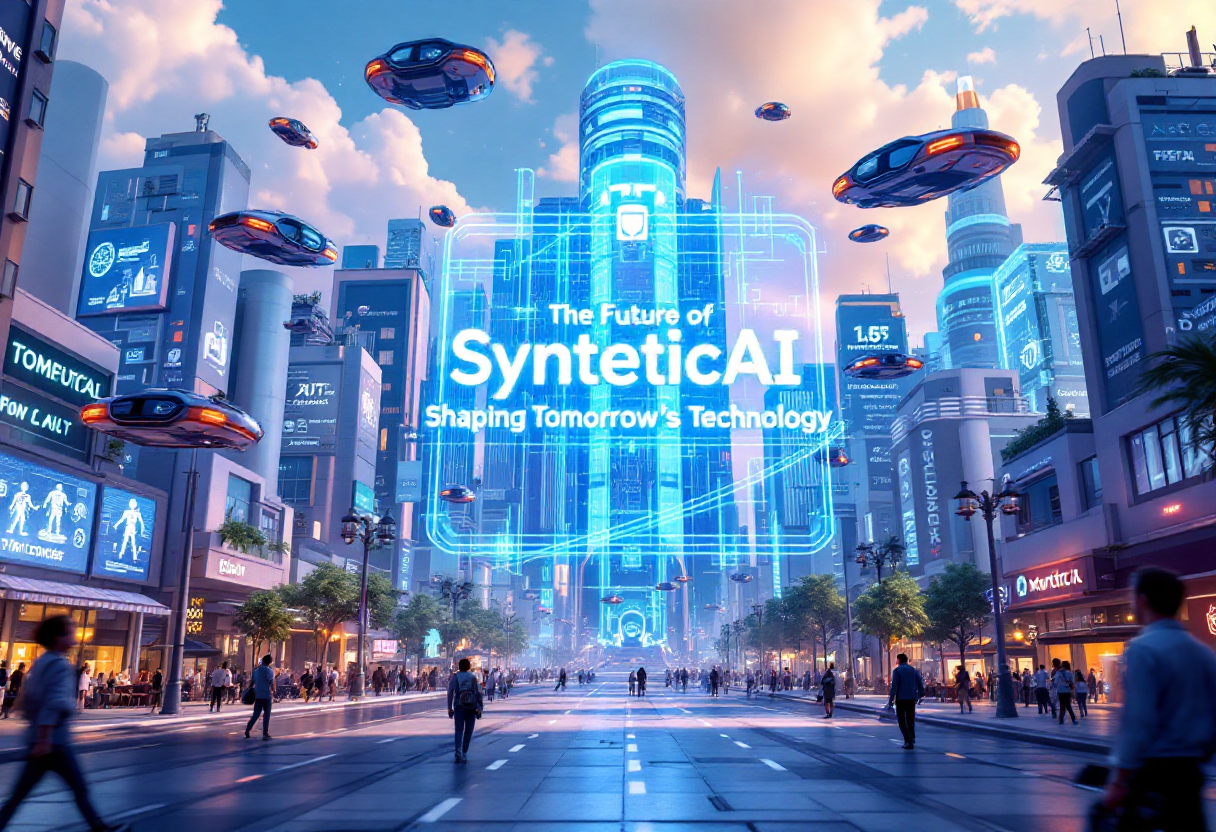
The Future of Synthetic Intelligence in Robotics & Automation – The world of robotics is undergoing a transformation one driven not just by algorithms but by Synthetic Intelligence (SyntheticAI). This emerging technology fuses artificial intelligence, biological principles, and adaptive computing to create robots that can learn, evolve, and think independently.
As industries race toward smarter automation, synthetic intelligence stands as the core technology shaping this revolution.
Learn more at 👉 syntheticintelligence.shop
What is Synthetic Intelligence?
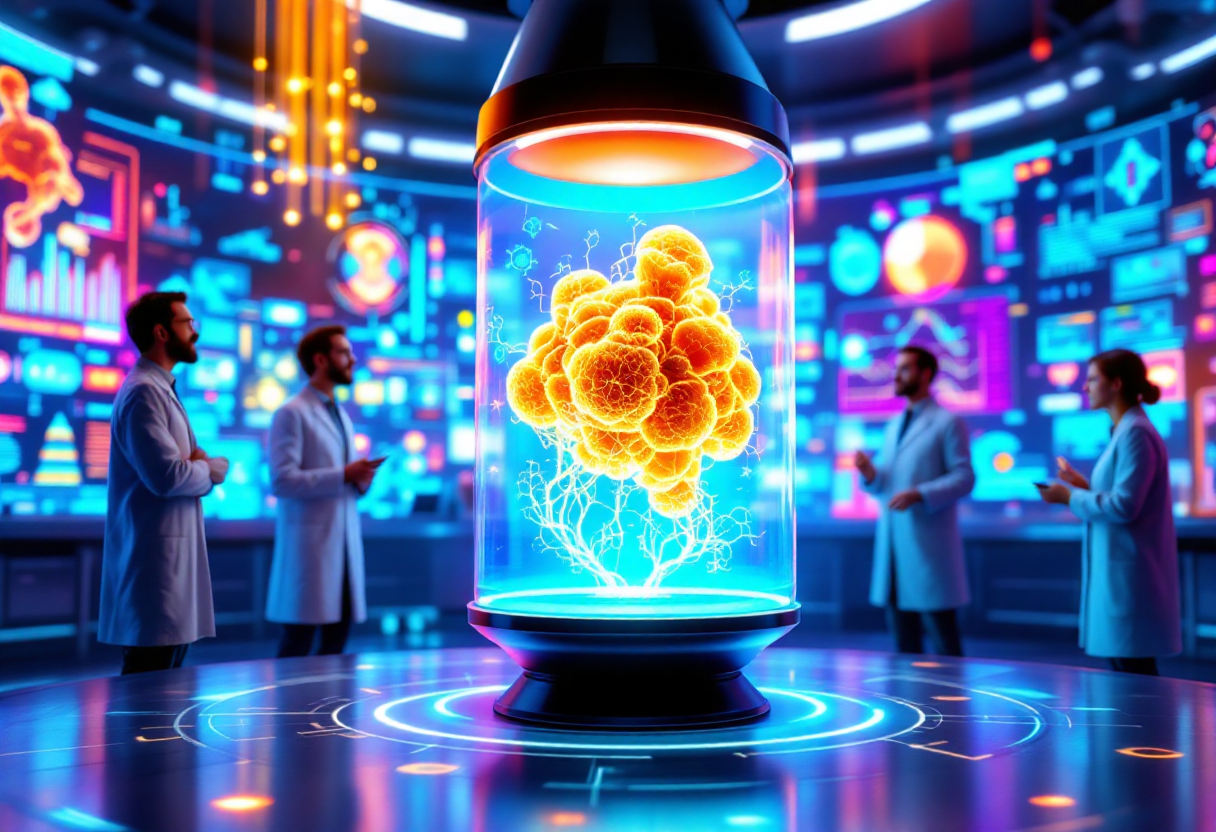
Synthetic Intelligence goes beyond traditional AI. While artificial intelligence follows programmed logic, syntheticAI can evolve new logic on its own mimicking how living organisms learn through experience.
It combines:
- AI algorithms (machine learning & neural networks)
- Synthetic biology (biologically inspired intelligence)
- Self-evolving computing systems
The result is an adaptive intelligence that powers a new generation of autonomous robots.
How Synthetic Intelligence is Transforming Robotics
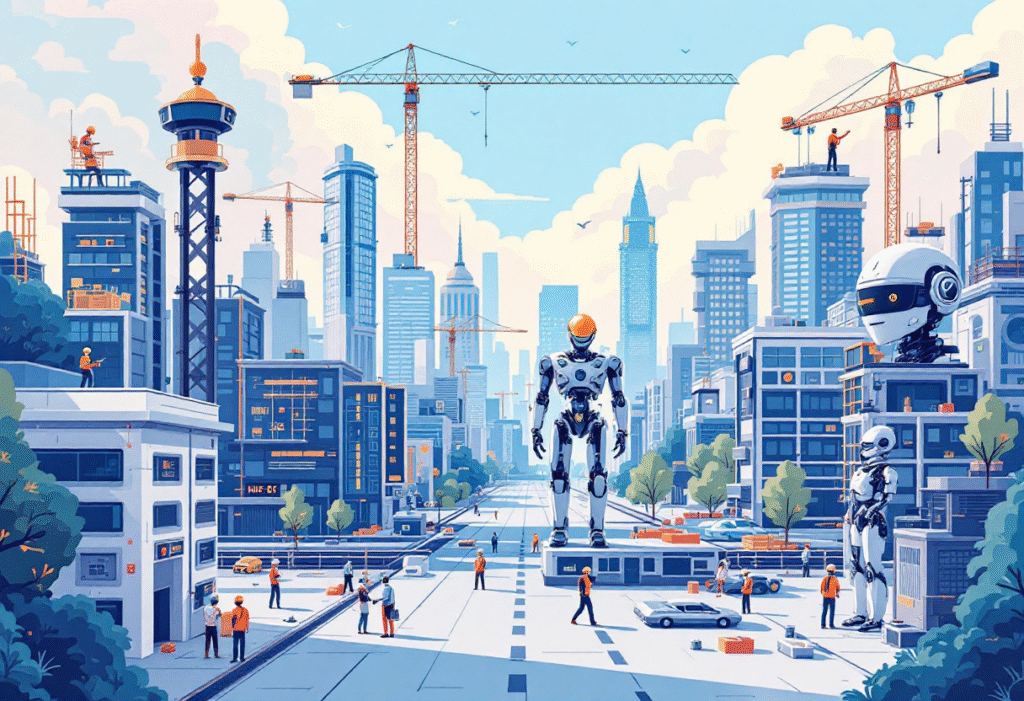
| Aspect | Traditional Robotics | Robotics with Synthetic Intelligence |
|---|---|---|
| Learning | Programmed routines | Continuous self-learning |
| Decision-making | Rule-based | Context-aware & predictive |
| Maintenance | Manual updates | Self-diagnosis & repair |
| Adaptability | Limited | Evolves with environment |
Robots driven by synthetic biological intelligence can adjust their behavior, repair themselves, and collaborate seamlessly with humans — making automation safer and more efficient.
Applications in Automation
1. Smart Manufacturing
Factories are shifting from static automation to syntheticAI-driven systems that learn from production data, reduce waste, and optimize processes without human intervention.
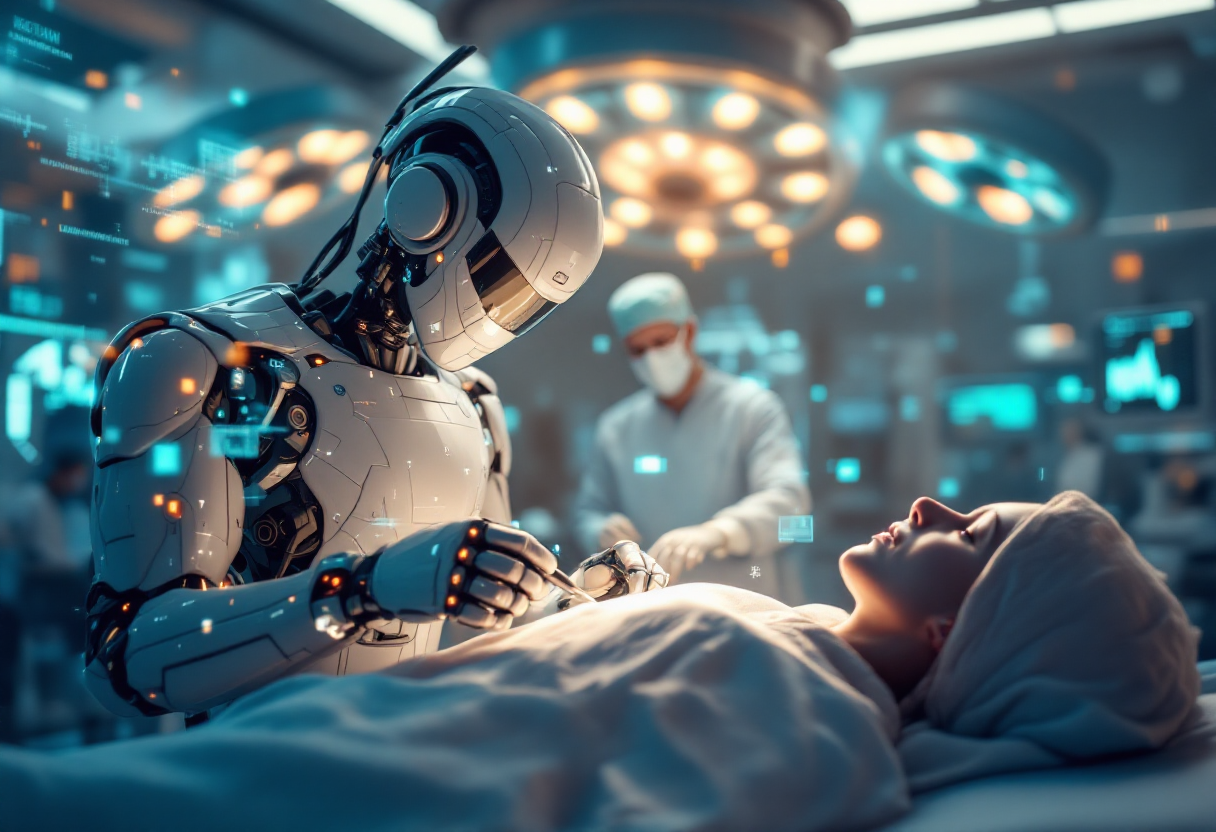
2. Healthcare Robotics
Synthetic artificial intelligence allows medical robots to understand complex biological patterns, perform precise surgeries, and adapt to patient conditions in real-time.
3. Logistics and Supply Chains
Self-evolving robots can predict maintenance, reroute deliveries, and optimize logistics dynamically cutting operational costs dramatically.
4. Agriculture
SyntheticAI enables farming robots to analyze soil, climate, and crop health autonomously, improving yields and sustainability.
5. Space Exploration
Synthetic biological intelligence could help robots adapt to extreme conditions, repair damage, and continue operations without Earth-based control.
Why Synthetic Intelligence Matters in Robotics
- Greater Autonomy – Robots can operate without constant human input.
- Enhanced Efficiency – Systems continuously learn and improve.
- Cost Reduction -Self-optimization lowers maintenance and downtime.
- Human Collaboration – Machines understand context, emotion, and intent better.
- Scalability – Synthetic systems evolve to meet growing industrial demands.
Challenges and Ethical Considerations
While synthetic intelligence promises a brighter future, it raises vital questions:
- How do we maintain control over self-learning machines?
- How do we ensure job balance between automation and human roles?
- Can we design ethical frameworks that prevent bias and misuse?
Developing global standards will be essential as robots gain more autonomy and intelligence.
The Future Ahead
By 2030, experts predict that syntheticAI-powered robotics will dominate automation industries. We’ll see collaborative robots (cobots) that anticipate human needs, adaptive drones that evolve mid-mission, and factories that run entirely on self-evolving intelligence.
In essence, synthetic intelligence is creating a new partnership between humans and machines – one based on evolution, not programming.
Conclusion
Synthetic Intelligence is redefining the future of robotics and automation. With syntheticAI, machines are not just tools – they are intelligent collaborators capable of growth, adaptation, and creativity.
The coming decade belongs to synthetic intelligence, where automation meets evolution.
Stay informed about this revolution at 👉 syntheticintelligence.shop
FAQ
1. What is the role of Synthetic Intelligence in robotics?
It enables robots to evolve, learn, and adapt to changing environments without reprogramming.
2. How does SyntheticAI improve automation?
SyntheticAI creates systems that self-optimize, predict errors, and make intelligent decisions in real-time.
3. What industries will benefit most?
Manufacturing, healthcare, logistics, agriculture, and space exploration are leading adopters.
4. Is Synthetic Intelligence safe for human collaboration?
Yes, with proper ethical design, syntheticAI enhances safety by understanding human context and actions.
5. What’s the future of Synthetic Intelligence in robotics?
It will drive an era of self-evolving, adaptive machines that co-create and co-work with humans.






Leave a Reply